
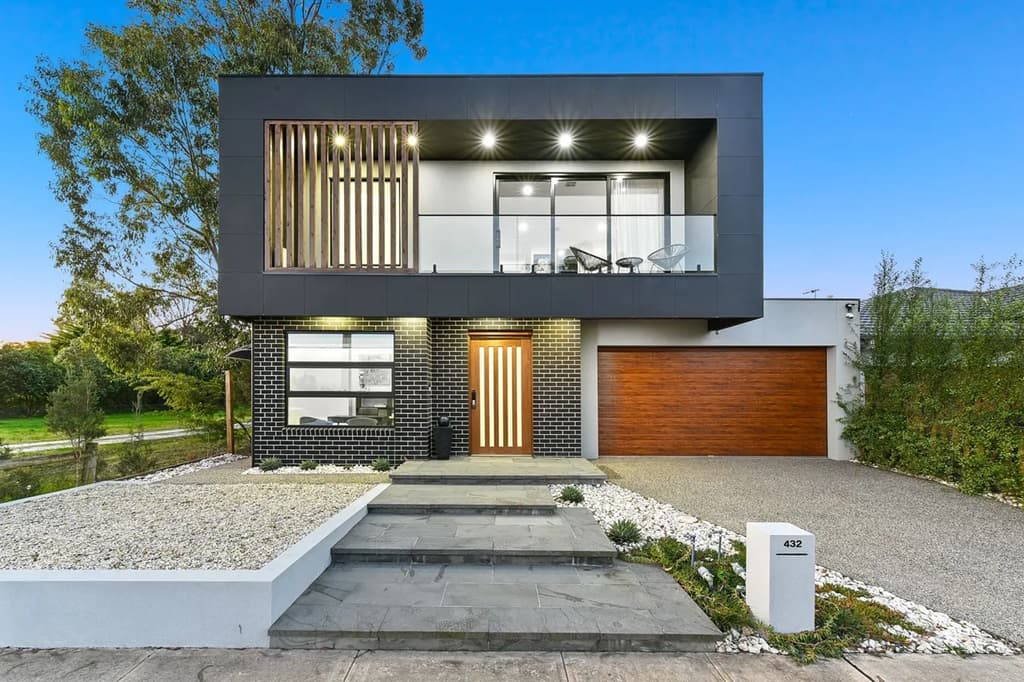
Sloping Blocks
Design that works with your land, not against it.
Most Melbourne builders decline sloping blocks. NE Homes takes them on.
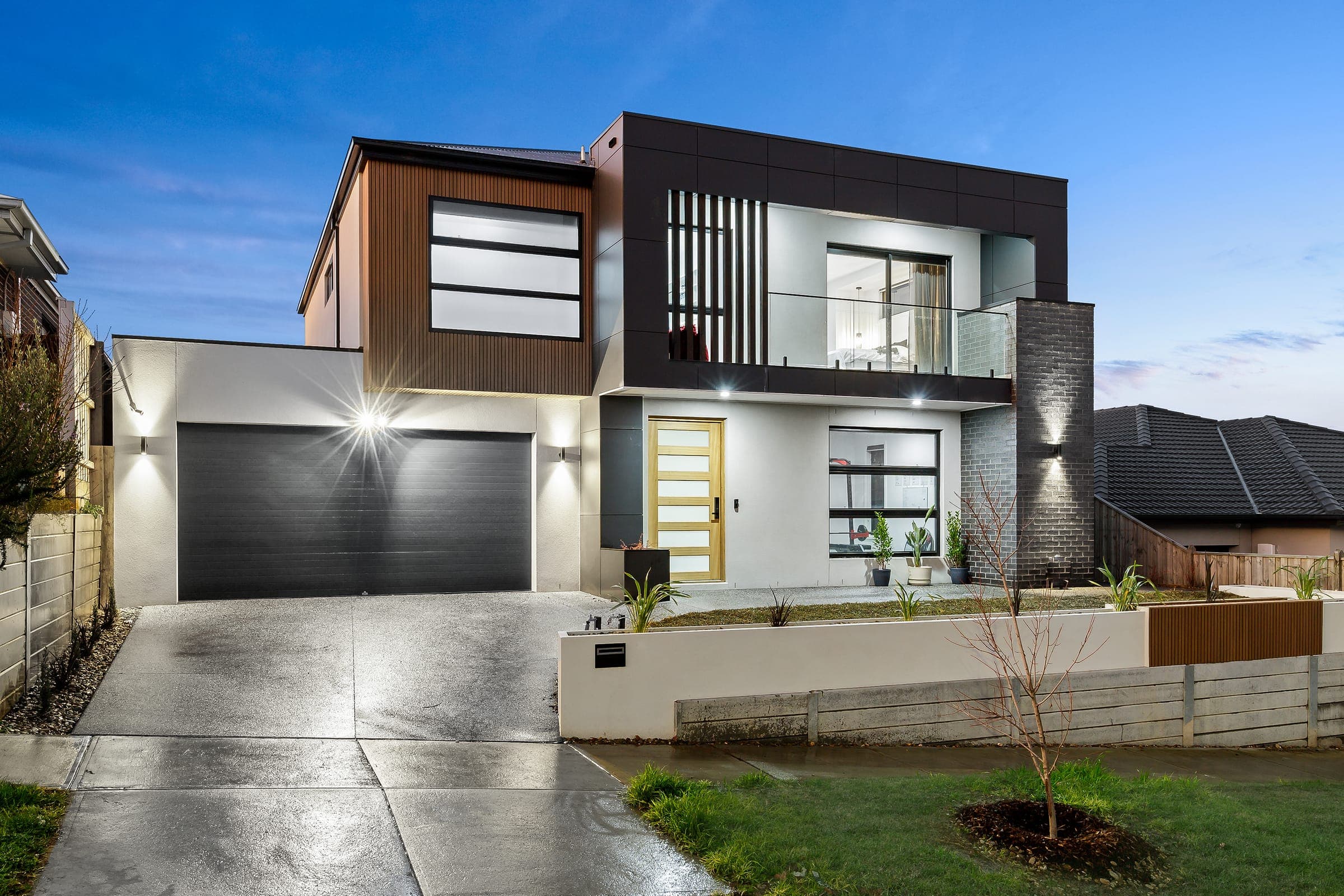
Volume builders price sloping blocks as a problem. The site cost estimate goes up, the timeline extends, and many decline the job entirely. NE Homes has completed multiple sloping block builds across Melbourne's south east. These sites are a regular part of the workload, not an exception.
Much of Melbourne's east and south east sits on reactive clay, and on our own jobs the soil report often comes back Class P, particularly on knockdown rebuilds. That result calls for specific engineering on the footings, and the detail in the report decides how much. On a sloping block, soil and slope have to be planned together: the soil moves with the seasons, and the fall of the land affects drainage through and around the structure. How the site is classified after soil testing is what sets the footing design, so it is worth understanding before you commit to a design. NE Homes engages a drainage engineer on sloping block projects where the site warrants it.
Old Berwick shows the pattern clearly, where ridge lines, creek approaches and corner falls put reactive clay on a grade. That compound problem is what a sloping block builder in Berwick has to solve before a slab design means anything.
Design, structural engineering coordination, council permits and construction all run under one NE Homes contract. Our director manages every stage from the site assessment through to handover.
Elevation is an asset on the right design
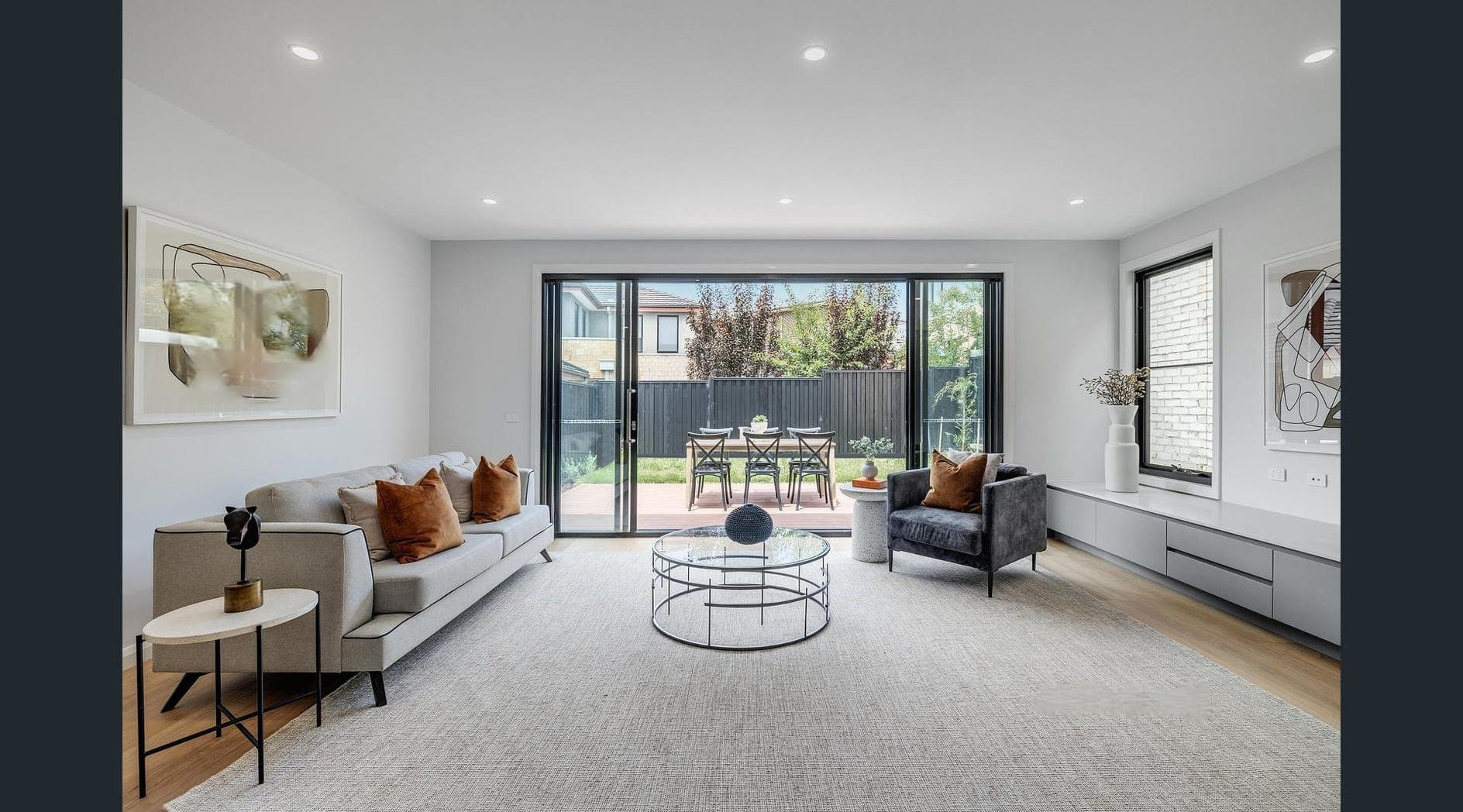
A sloping block offers positions that a flat block on the same street cannot: elevated outlooks, more direct northern sun exposure, natural cross ventilation between levels. The question at design stage is how to use the fall rather than how to remove it.
Cut and fill is the default approach on many sloping sites because it produces the simplest calculation. But it increases retaining wall requirements and can direct stormwater in ways that show up as problems years after the slab is poured. NE Homes assesses each block on its own merits and is direct about when split-level design will perform better over the build lifecycle.
Stormwater is designed from the site assessment stage, not addressed after the fact. On sloping sites, water volume and speed require in-ground drainage and absorption systems specified before construction starts, not added as variations.
Sloping sites also create natural lighting opportunities that flat blocks rarely offer. A downhill rear elevation allows larger windows and glass at lower levels without compromising privacy. Skylights and high-set windows can be positioned on the high side of the roof to bring light into areas that would sit under a flat ceiling on level ground. In a recent Warrandyte build, NE Homes oriented the rear of the home to overlook a creek and park reserve, with large windows placed to maximise that aspect throughout the day.
- 1Cut and fill removes soil from the high side and uses it to build up the low side, creating one flat platform.
- 2It increases retaining wall requirements.
- 3It can direct stormwater in ways that show up as problems years after the slab is poured.
- 4A split-level follows the contours. On a moderate to steep fall it can reduce total construction cost.
- 5A downhill rear elevation allows larger windows and glass at lower levels without compromising privacy.
- 6The levels give natural cross ventilation between them.
Schematic, not to scale. The dashed line marks the natural ground. Cut and fill is often the cheapest approach upfront. We assess each block on its own merits and say plainly when a split-level will perform better over the life of the house.
How NE Homes approaches sloping blocks
Civil engineering expertise on complex sites
NE Homes' director has a background in civil engineering. That knowledge informs how sloping block projects are designed and built, not just managed. Site constraints, retaining requirements and foundation engineering are assessed from the outset, not added as afterthoughts once problems emerge.
Structural engineering in the design, not after it
NE Homes coordinates structural engineers from the design stage. The retaining walls, slab details and subfloor structure are engineered before the plans are locked, not added as amendments once the design is done. Late-stage engineering amendments are a common cost driver on sloping block builds. NE Homes removes that risk.
Drainage designed at site assessment
Stormwater is a design input on sloping sites. NE Homes engages drainage engineering where the site warrants it and specifies in-ground systems before construction starts. The drainage plan is in the documentation before ground is broken.
A site cost estimate before any fees are spent
Sloping block site costs depend on the degree of fall, soil class and design approach. NE Homes provides a detailed site cost estimate after the initial assessment, before you commit to design or engineering fees. If the site makes a certain design unviable, you know that early.
Our Preliminary Process
Site Assessment
Free visit, zoning & constraints
Consultation
Director meets client, goals & brief
Proposal
Transparent pricing, inclusions & exclusions
Preliminary Contract
Clarifies expectations, costings and timeframes for the coming stage
Design & Build
Plans, selections, construction, handover
Sloping block builds run 16 to 24 months depending on site complexity. Here is what NE Homes brings to that process.
- checkDirector has a civil engineering background. Site constraints, retaining requirements and foundation design are assessed from the outset, not added once problems surface.
- checkStructural engineers are coordinated at the design stage, not added as amendments once plans are locked. Late engineering changes are one of the common cost drivers on sloping sites.
- checkDrainage is designed at site assessment. On sloping sites, the drainage plan goes into the documentation before construction starts, not added as a variation.
- checkBase stage on a sloping block runs 4 to 8 weeks longer than on flat land. That is factored into the programme from the start, not discovered mid-build.
- checkWe deliberately cap our build numbers. Director on site within 48 hours at any point during construction.
- checkBuilding Licence CDB-U 62725, registered with the Building and Plumbing Commission (BPC).
Questions About Sloping Blocks
Does building on a slope cost more?
Yes. Sloping sites require more earthworks, concrete and structural engineering than flat blocks. The degree of slope, soil conditions and the design approach all affect the final figure. Methods vary: split levels, stumps and suspended slabs are all options depending on the site. Cut and fill is often the cheapest upfront approach but can add retaining wall costs and create drainage problems that show up years after the slab is poured. NE Homes provides a detailed site cost estimate before any design fees are committed.
What is cut and fill, and when does it make sense?
Cut and fill removes soil from the high side of your block and uses it to build up the low side, creating a flat platform for construction. It is often the cheapest upfront approach, but it increases retaining wall requirements and can compromise drainage long term. On sites with a moderate to steep fall, a split-level design that follows the contours can reduce total construction cost and produce a better result over the life of the house. NE Homes assesses each site on its own merits.
Can I build single-storey on a sloping block?
Yes. Any configuration works on any slope; it comes down to what the client needs from the home. A single-storey on a sloping block involves a higher underfloor void or slab edge detail and more earthworks than a split-level approach. Whether that is the right call depends on the site fall, the council overlays and the budget for site works. NE Homes goes through those options at the site assessment.
How do you manage stormwater on a sloping block?
Stormwater is designed from the site assessment stage. On sloping sites, water moves faster and in greater volume than on flat land, so the drainage plan goes into the documentation before construction starts. NE Homes engages a drainage engineer where the site warrants it. Where council or the water authority requires formal approval, that is managed as part of the permit process. The drainage design also accounts for future landscaping and pool construction so those do not create problems after handover.
What licence covers NE Homes' work?
NE Homes is registered with the Building and Plumbing Commission (BPC), which manages builder insurance and registration in Victoria. We hold both company and personal domestic building unlimited licences, covering sloping block builds, custom homes, knockdown rebuilds, dual occupancy and all residential building work across Victoria.
Discuss your sloping block build
Building on a grade in the south east? See how we work as a sloping block builder in Old Berwick, or start from a flat site with a custom home builder in Berwick. On the bay side, parts of Black Rock and Beaumaris rise away from Beach Road under a native vegetation overlay, which is where a custom home builder in Sandringham, Black Rock and Beaumaris starts.
Planning a build on a slope? Our guide to building on a sloping block compares split-level and cut-and-fill.