
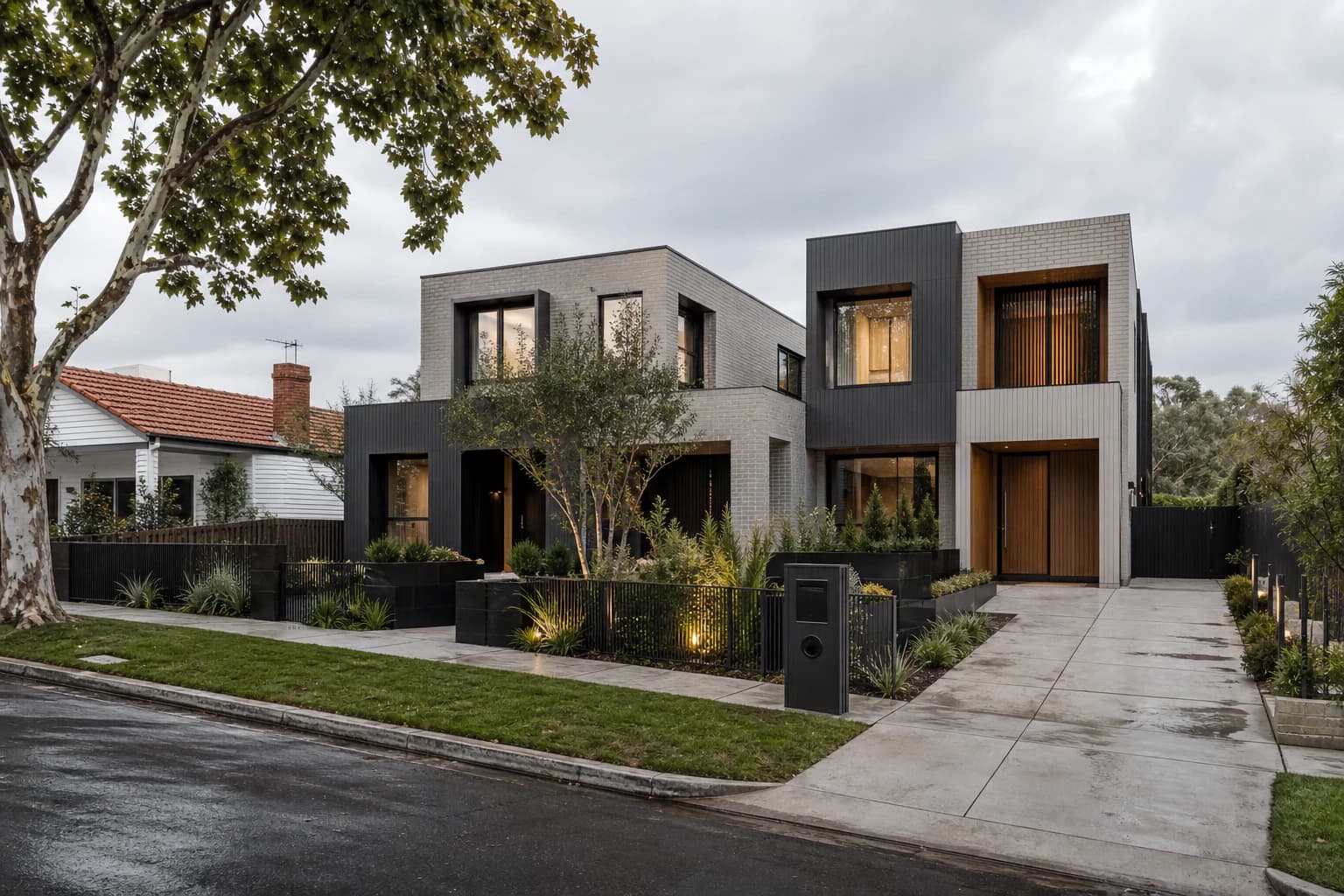
A dual occupancy is two dwellings on one residential lot. A townhouse development usually means three or more dwellings on the same site, each one multi-level, sharing walls or a common driveway. The two terms get used loosely, and much of what comes up in a search describes New South Wales rules that do not apply here. In Victoria both are assessed under the same planning clause, and your block's zone and shape decide which one is realistic.
What is the difference between a dual occupancy and a townhouse?
A dual occupancy is two dwellings on one lot, either side by side or one behind the other. A townhouse development is three or more dwellings on the same land, usually two storeys, sharing walls and an accessway. The practical difference is density: how many homes the site carries and how much land each one ends up with.
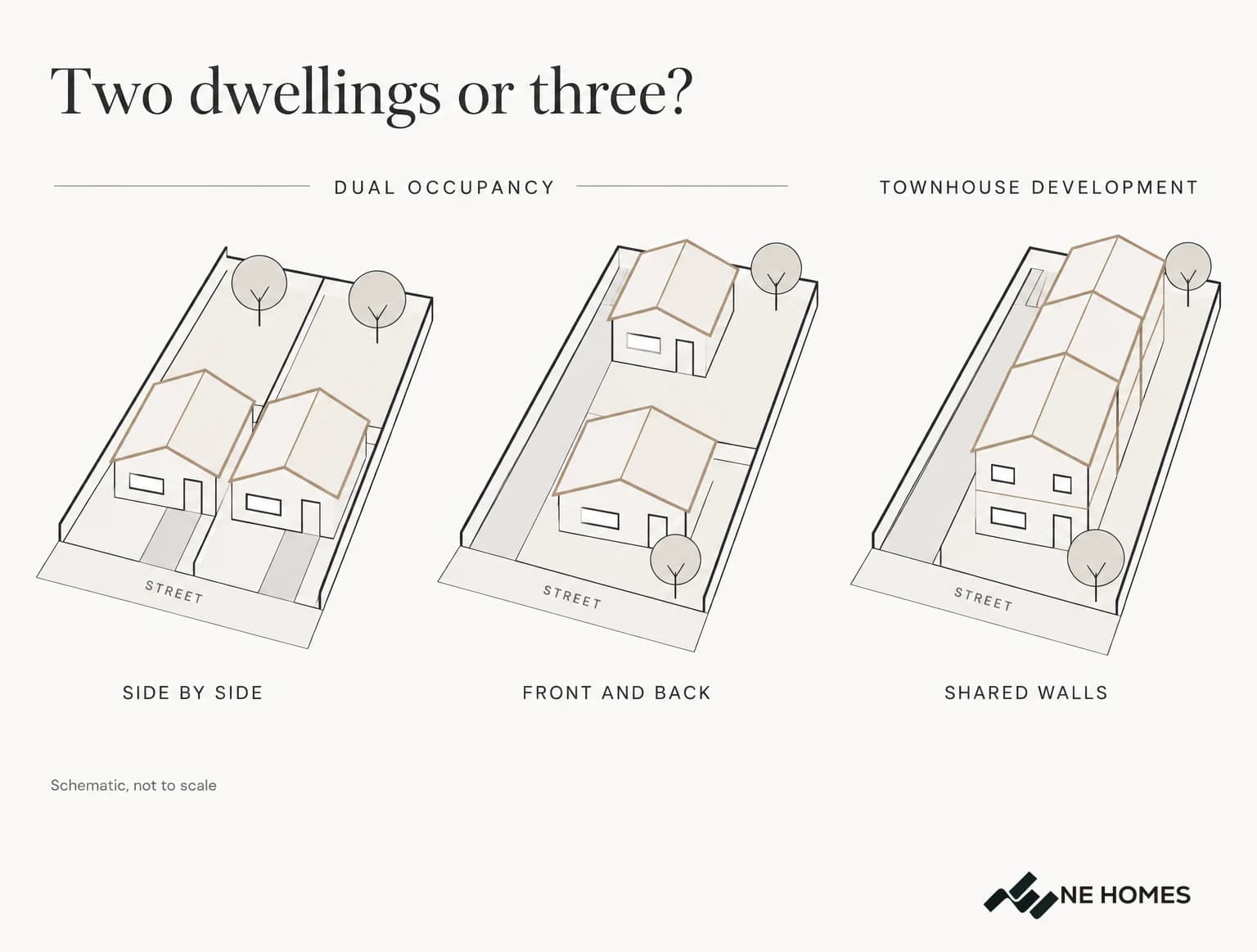
A dual occupancy is two dwellings on one lot, either side by side or one behind the other. A townhouse development is three or more dwellings on the same site, usually two storeys, sharing walls and an accessway, so each home ends up with less land.
Schematic drawing, not to scale
Is a duplex the same as a dual occupancy?
In Victoria, close enough. A duplex is a dual occupancy where the two dwellings are attached under one roofline and share a common wall. A detached dual occupancy separates them, often one at the front and one at the rear. Duplex describes what the building looks like, while dual occupancy is the planning term for two dwellings on one lot.
Which one will your block allow?
Both need a planning permit, and both are assessed against Clause 55, the standard covering two or more dwellings on a lot. Your zone sets the ceiling. The General Residential Zone is the most accommodating. The Neighbourhood Residential Zone is written to protect established suburban character and can limit height and the intensity of infill.
Block size and shape then decide the rest. Each dwelling needs its own private open space, car parking and setbacks, and none of those requirements shrink because you have added a third home. A wide block often carries three dwellings comfortably where a long narrow block of identical area carries two.
Is a dual occupancy worth it?
That depends on what you want the block to do. Owners planning to stay often build two, live in one and rent or sell the other, which keeps them in the area on land they already hold. Investors weigh the return against holding the site through design, permit and construction. The honest answer comes from a feasibility study on your specific block, run before design fees are spent, because a block that cannot carry two dwellings well will not carry three.
What are the drawbacks of each?
Townhouses give you more dwellings and more total yield, and each home gets less land, less private open space and usually a shared driveway. On a narrow or irregular block, three dwellings can mean three compromised homes. Dual occupancy trades yield for space, giving you two dwellings that each still feel like a house, which is what most owner-occupiers are after. A townhouse development also draws more scrutiny from neighbours and council, so objections and permit timelines tend to run longer.
| Dual occupancy | Townhouse development | |
|---|---|---|
| Dwellings | Two on one lot | Three or more on one site |
| Land per dwelling | More | Less |
| Typical form | Side by side, or front and back | Two storeys, shared walls |
| Planning clause | Clause 55 | Clause 55 |
| Permit | Always required | Always required |
| Subdivision | Separate titles available | Separate titles available |
| Best for | Owner-occupiers, downsizers, staying local | Maximum yield on a suitable site |
Do you get separate titles either way?
In most cases, yes. A dual occupancy and a townhouse development can both be subdivided into separate titles, certified around completion through your council and Land Use Victoria. You will read online that dual occupancies cannot be subdivided. That claim comes from New South Wales commentary and does not describe how it works in Victoria. Whether you subdivide is a call to make at feasibility, because it shapes both the design and the contract.
How to choose between them
Work through these before you commit to either:
- What does my zone allow, and what does its schedule change?
- Is my block wide, or just large? Width and orientation decide layout.
- Am I building to live here, or to sell?
- Do I want two homes that feel like houses, or the most dwellings the site will take?
- Has anyone run a feasibility on this block before I pay for design?
A builder who answers those on your block, before drawings start, saves you the cost of finding out later.
Dual occupancy or townhouse, the first question is the same: what will this block actually allow, and do the numbers work. NE Homes runs that feasibility before any design fees are spent, designs to Clause 55 from the first plan and manages the project through to separate titles under one contract. See how we run dual occupancy and development projects across Melbourne, or read our guide to dual occupancy in Melbourne for zoning, timelines and how to choose a builder.
The wide established blocks in the City of Monash are where this question comes up most, so if your site sits on the Monash corridor, start with what a dual occupancy builder in Mulgrave checks against the schedule to your zone before any drawings begin.
Frequently Asked Questions
What is the difference between a dual occupancy and a townhouse?
A dual occupancy is two dwellings on one lot, side by side or one behind the other. A townhouse development is three or more dwellings on the same site, usually two storeys, sharing walls and a driveway. The difference is density, and it shows up in how much land each dwelling gets.
Is a duplex the same as a dual occupancy?
Broadly, yes. A duplex is a dual occupancy where both dwellings are attached under one roofline and share a common wall. Dual occupancy is the planning term, while duplex describes the built form.
Can a dual occupancy be subdivided in Victoria?
Yes. Both dual occupancies and townhouse developments can be subdivided into separate titles, usually certified around completion. Claims that dual occupancies cannot be subdivided come from New South Wales commentary and do not apply in Victoria.