
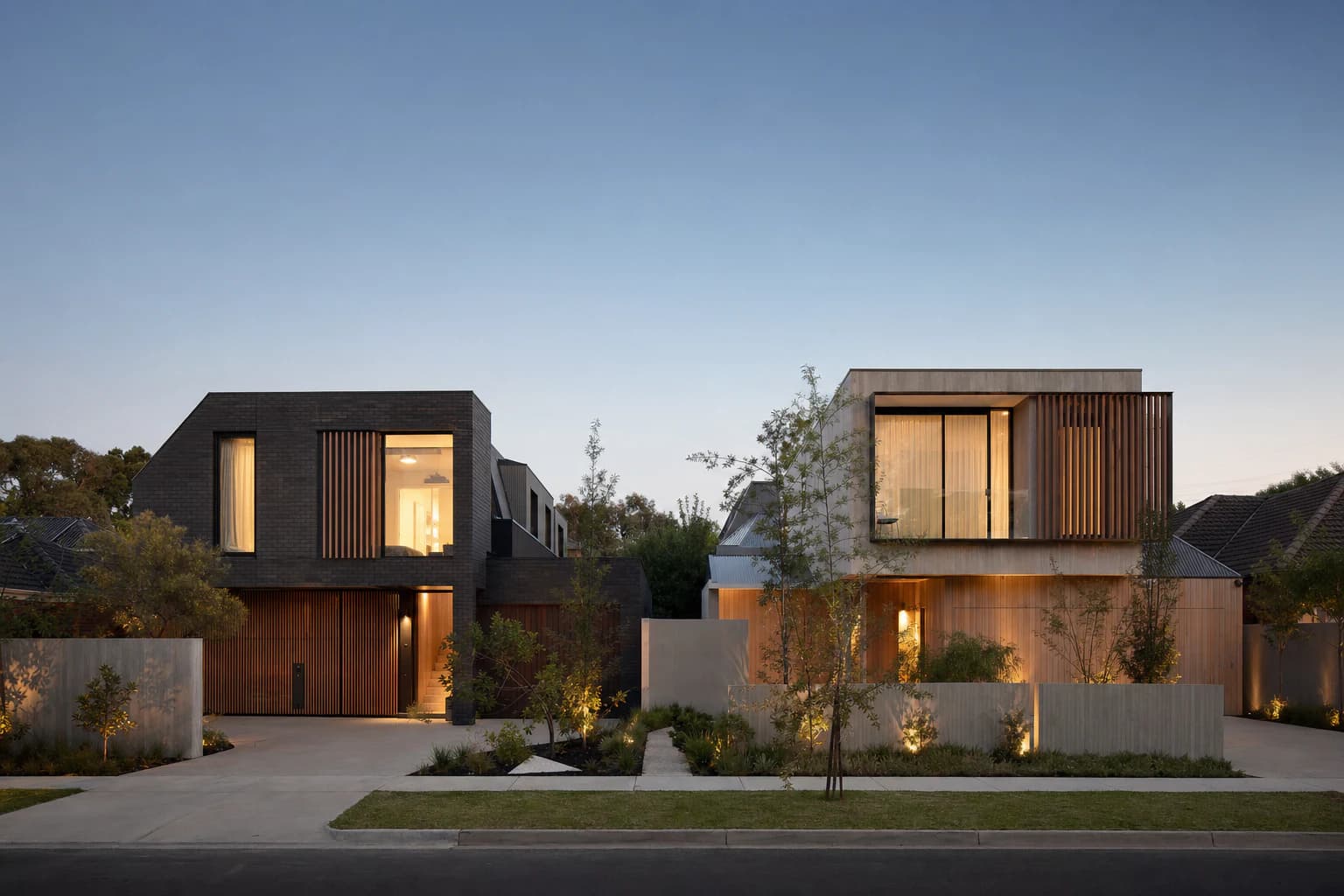
A dual occupancy is two dwellings built on a single residential block, either side by side or one behind the other. In Melbourne it is one of the most common ways owners get more from a block they already hold: build two homes where one stood, then live in one and rent or sell the other, or develop the pair as an investment. Whether your block can carry two dwellings comes down to its zone, its size and the planning controls over it, and that is the thing to check before anything else.
Is my block suitable for a dual occupancy?
Two things decide it: the zone your block sits in and how much land you have. As a rough guide, a dual occupancy needs enough room for each dwelling to meet its own site coverage and private open space, which usually means from around 300 to 600 square metres per dwelling depending on the council. A planning certificate for your address confirms the zone and any overlays before you spend anything on design.
Overlays can change the answer. Heritage, flood, bushfire and significant-vegetation controls all sit on top of the zone and can limit what you build or add conditions to the permit. They rarely rule a dual occupancy out on their own, but they need to be read early, not discovered halfway through design. If your block sits in the City of Monash, we have set out the specific site area, setback and site coverage numbers in a separate Monash feasibility guide.
General Residential vs Neighbourhood Residential: why your zone matters
Most Melbourne residential land falls into one of three zones: General Residential (GRZ), Neighbourhood Residential (NRZ) or Mixed Use (MUZ). The GRZ is the most development-friendly. The NRZ is the tightest, written to protect suburban character, and it can cap both the number of dwellings and the building height on your block. Two blocks a street apart can allow very different things, which is why the zone decides far more than the block's street appeal does.
Side-by-side or front-and-back?
Block width and orientation usually settle the layout. Side-by-side puts both dwellings facing the street, each with its own driveway, and suits wider blocks. Front-and-back places one dwelling behind the other on a battle-axe or shared accessway, and suits narrower or deeper blocks. The layout you can use affects the yield, the cost and how the subdivision is set up, so it is worth resolving at the concept stage. And if townhouses are also on the table, our dual occupancy vs townhouse comparison covers how the two paths differ.
What does a dual occupancy cost to build in Melbourne?
Build cost is quoted per dwelling and moves with size, site conditions and finish, so there is no flat rate: a compact single-level dwelling and a larger two-storey one on the same block sit well apart. Because the approved design sets the full scope, a reliable fixed price only comes once planning and building permits are resolved. The feasibility at the start gives you a working range to plan around, before any design fees are spent.
How long does a dual occupancy take in Melbourne?
From first consultation to handover, allow 18 to 24 months. The planning permit runs about 3 to 6 months through a metropolitan council, longer if neighbours object. The building permit adds 6 to 8 weeks on top. Construction of a dual occupancy runs 10 to 14 months depending on the scale. Feasibility and concept design happen up front, before the permit clock starts, so the early weeks are not wasted.
Custom builder or volume builder for a dual occupancy?
Both build dual occupancies, and the right one depends on your block and your goals. Volume builders offer fixed duplex ranges at a set price, which works well on standard rectangular blocks. Custom builders design to the block, which matters on tight, sloping, irregular or character-controlled sites where a standard plan does not fit.
| Volume builder | Custom builder | |
|---|---|---|
| Design | Fixed duplex range | Designed to your block |
| Feasibility | Often after you commit | Before design fees |
| ResCode | Standard plan, amended if the site differs | Built into the first design |
| Your contact | Rotating project manager | Same builder start to finish |
| Best for | Standard blocks, lowest price | Tight, sloping or character-controlled blocks |
How to choose a dual occupancy builder in Melbourne
The builders worth shortlisting can answer a few questions plainly. Ask each one:
- Do you run the feasibility yourself, before I pay any design fees?
- Do you design to ResCode from the first set of plans, or fix it after council comes back?
- Who is my point of contact once the build starts, and will they be on site?
- Is the price fixed after permits, and what sits outside it?
- Have you built dual occupancies on blocks like mine?
A builder who runs feasibility first and designs to the planning rules from the start costs you less in amendments and delays than one who sorts it out after the fact.
Do I get two separate titles?
Usually, yes. The block stays on one title through design and most of the build, then the subdivision into two separate titles is certified around completion, through the council and Land Use Victoria. Two titles let you sell or finance each dwelling on its own. Whether you subdivide comes down to your plan, so it is worth deciding at the feasibility stage rather than after the build.
Every dual occupancy starts with the same question: what will this block actually allow, and do the numbers work. NE Homes runs that feasibility before any design fees are spent, designs to ResCode from the first plan, and manages the project through to two separate titles under one contract. See how we run dual occupancy and development projects across Melbourne, or read about building a dual occupancy in Mulgrave and the wider Monash corridor.
Frequently Asked Questions
What is the minimum block size for a dual occupancy in Melbourne?
There is no single minimum. It depends on the zone and on each dwelling meeting its own site coverage and private open space, which usually works out from around 300 to 600 square metres per dwelling depending on the council.
Can I live in one dual occupancy dwelling and rent the other?
Yes. Many owners build two, move into one, and rent or sell the other. If you plan to sell them separately, set the subdivision up for two titles from the start.
Do I need a planning permit for a dual occupancy?
In almost all cases, yes. Two dwellings on a lot are assessed against ResCode through your council, which takes about 3 to 6 months. NE Homes manages the permit as part of the project.